

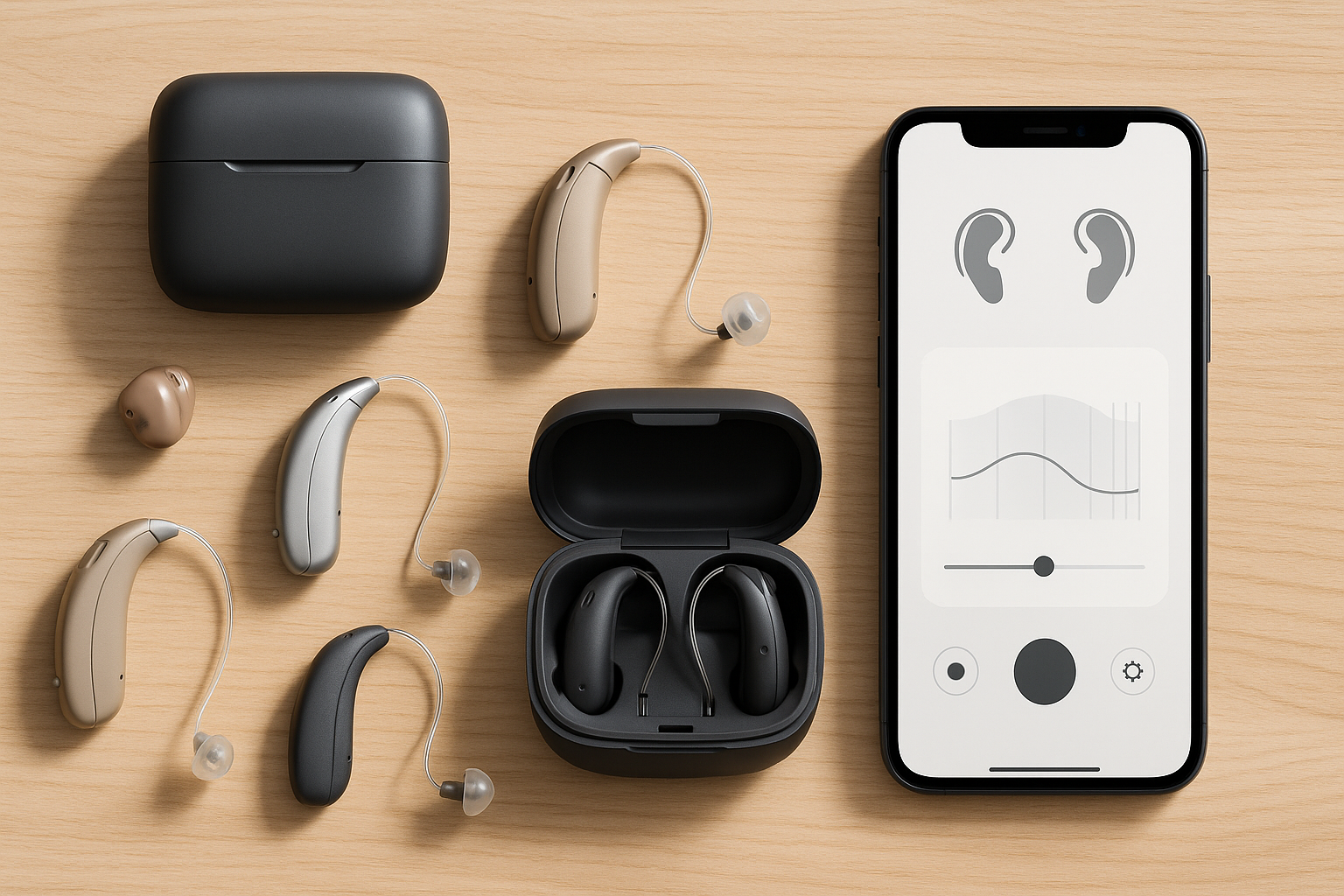
Quick summary — Top hearing aids of 2025 (USA)
Short version: For nearly invisible, premium sound, the Eargo 5 tops our list. Want strong tech and remote support? Try Jabra Enhance. If you need an affordable, straightforward OTC option, MDHearing VOLT is great value.
| Choice | Why we picked it | Price (approx.) | Buy |
|---|---|---|---|
| Eargo 5 (Premium) | Nearly invisible, self-fitting, rechargeable, advanced noise processing. | ~$1,950 (pair) | View Price |
| Jabra Enhance (Tech & support) | App control, tele-audiology, Bluetooth streaming, strong after-sales service. | ~$1,195–$1,995 (pair) | View Price |
| MDHearing VOLT (Budget) | Rechargeable, simple controls, budget-friendly, reliable customer service. | ~$397 (pair) | View Price |
Quick tip: Want a discreet option? Eargo. Prefer connectivity and support? Jabra. Need the lowest price? MDHearing. (Full details below.)
Best Hearing Aids in 2025 (USA) — Compare Top Models, Prices & Features
The U.S. hearing-aid market in 2025 offers more options than ever — from high-tech, self-fit devices to affordable OTC solutions. Below, we compare top models by performance, comfort, and value.
At a glance — Comparison of popular hearing aids (2025)
| Model / Brand | Style | Key features | Approx. price | Best for |
|---|---|---|---|---|
| Eargo 5 | CIC (very discreet) | Self-fit app, adaptive noise reduction, rechargeable case | ~$1,950 (pair) | Invisible, premium comfort |
| Jabra Enhance | RIC / In-ear | App control, remote care, Bluetooth streaming | $1,195–$1,995 | Tech-savvy users |
| MDHearing VOLT | BTE (compact) | Rechargeable, directional mics, simple setup | ~$397 | Budget buyers |
Short reviews — Who each pick suits
Eargo 5 — Best premium & nearly invisible
Eargo’s ultra-discreet design, rechargeable case, and customizable sound profiles make it ideal for those prioritizing appearance and convenience.
Jabra Enhance — Best tech & support
Jabra combines Bluetooth connectivity with professional remote tuning. Its app-based adjustments and three-tier product line help tailor performance to individual needs.
MDHearing VOLT — Best budget OTC pick
The VOLT line offers dependable sound enhancement and rechargeability at a fraction of traditional costs. Great for mild-to-moderate hearing loss.
How to choose the right hearing aid
- Style & comfort: CIC is discreet; RIC/BTE gives stronger amplification.
- Loss level: OTCs suit mild-to-moderate loss; consult an audiologist otherwise.
- Connectivity: Bluetooth and apps add control and convenience.
- Power: Rechargeable batteries are easier but need nightly charging.
- Trial periods: Look for 30–100 day risk-free returns.
Pros & Cons
Pros
- Broader OTC availability & lower entry cost.
- Rechargeable and app-based models now standard.
- Remote adjustments reduce clinic visits.
Cons
- Premium models can still cost over $2,000.
- OTC devices not suited for severe hearing loss.
- Fit and comfort vary by ear shape and user.
FAQs
Are OTC hearing aids as good as prescription ones?
They work well for mild-to-moderate hearing loss but lack custom clinical tuning. Severe cases still require professional fitting.
How long do they last?
Typically 3–7 years depending on care and environment.
Does insurance cover hearing aids?
Most U.S. insurers and Medicare do not cover them directly, though some Advantage or supplemental plans offer discounts.
Final verdict
✔ Eargo 5 for discreet premium design.
✔ Jabra Enhance for connectivity and pro support.
✔ MDHearing VOLT for reliable low-cost performance.
Shop Eargo 5
Shop Jabra Enhance
Shop MDHearing VOLT
